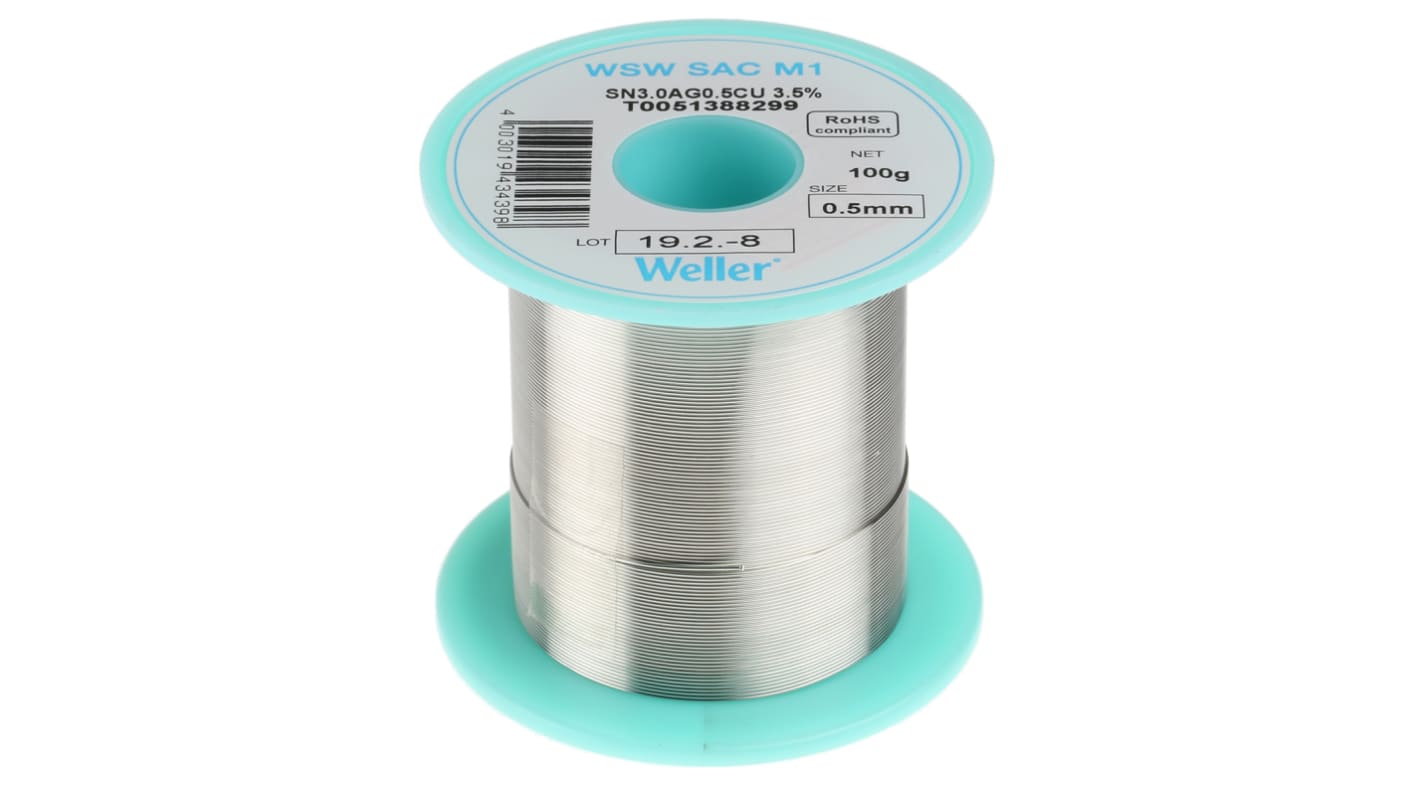
Weller Blyfritt lod, 0.5 mm Tråd, smältpunkt 217 °C, 0 % bly, 0.5 % koppar, 96.5 % Tenn, 3 % Silver, 100 g
- RS-artikelnummer:
- 788-3708
- Distrelec artikelnummer:
- 302-38-691
- Tillv. art.nr:
- T0051388299
- Tillverkare / varumärke:
- Weller

Mängdrabatt möjlig
Antal (1 rulle med 1 enhet)*
339,36 kr
(exkl. moms)
424,20 kr
(inkl. moms)
GRATIS leverans för online beställningar över 750,00 kr
I lager
- 101 enhet(er) är redo att levereras
- Plus 109 enhet(er) är redo att levereras från en annan plats
Behöver du mer? Ange den kvantitet du behöver och klicka på "Kontrollera leveransdatum"
Rulle(ar) | Per rulle |
|---|---|
| 1 - 9 | 339,36 kr |
| 10 - 19 | 325,92 kr |
| 20 - 49 | 315,73 kr |
| 50 + | 305,76 kr |
*vägledande pris
- RS-artikelnummer:
- 788-3708
- Distrelec artikelnummer:
- 302-38-691
- Tillv. art.nr:
- T0051388299
- Tillverkare / varumärke:
- Weller
Specifikationer
Datablad
Lagstiftning och ursprungsland
Produktdetaljer
Hitta liknande produkter genom att välja ett eller flera attribut.
Välj alla | Attribut | Värde |
|---|---|---|
| Varumärke | Weller | |
| Produkttyp | Blyfritt lod | |
| Tråddiameter | 0.5mm | |
| Procent bly | 0% | |
| Produktform | Tråd | |
| Smältpunkt | 217°C | |
| Procent silver | 3% | |
| Procent tenn | 96.5% | |
| Flusstyp | Harts | |
| Produktvikt | 100g | |
| Procent koppar | 0.5% | |
| Standarder/godkännanden | No | |
| Välj alla | ||
|---|---|---|
Varumärke Weller | ||
Produkttyp Blyfritt lod | ||
Tråddiameter 0.5mm | ||
Procent bly 0% | ||
Produktform Tråd | ||
Smältpunkt 217°C | ||
Procent silver 3% | ||
Procent tenn 96.5% | ||
Flusstyp Harts | ||
Produktvikt 100g | ||
Procent koppar 0.5% | ||
Standarder/godkännanden No | ||
- COO (ursprungsland):
- JP
Weller WSW SAC M1 - blyfri lödtråd
Introduktion av blyfri lödtråd från Weller, utformad för användning i elektriska och elektroniska tillämpningar och för att vara miljövänlig. När ditt järn har den önskade temperaturen smälter lödtråden, flyter och stelnar väl. WSW SAC M1-lötarna har utvecklats för att uppfylla de allt strängare kvalitetskraven inom elektronikindustrin.
Funktioner och fördelar
WSW SAC M1-alternativ
Typiska tillämpningar
På grund av den relativt låga smältpunkten kan löddet enkelt bearbetas igen genom att värma upp det till en smältpunkt och använda en lödskruv för att ta bort den.
Lödning används vanligtvis med SMD- och genomhålskomponenter, med tillämpningar inom reparation, prototypning och produktion.
Vanliga frågor och svar
Vad är lödning tillverkad av?
Typer av lödmaskiner?
Vilken metall kan inte lödas?
Rostfritt stål och höglegerat stål om de inte är förpläterade i lödmetall.
Relaterade länkar
- Weller Blyfritt lod smältpunkt 217 °C 0.5 % koppar 3 % Silver, 100 g
- Weller Blyfritt lod smältpunkt 217 °C 0.5 % koppar 3 % Silver, 100 g
- Weller Blyfritt lod smältpunkt 217 °C 0.5 % koppar 3 % Silver, 100 g
- RS PRO Blyfritt lod smältpunkt 217 °C 0.5 % koppar 3 % Silver, 250 g
- RS PRO Blyfritt lod smältpunkt 217 °C 0.5 % koppar 3 % Silver, 500 g
- RS PRO Blyfritt lod smältpunkt 217 °C 0.5 % koppar 3 % Silver, 250 g
- RS PRO Blyfritt lod smältpunkt 217 °C 0.5 % koppar 3 % Silver, 250 g
- RS PRO Blyfritt lod smältpunkt 217 °C 0.5 % koppar 3 % Silver, 250 g