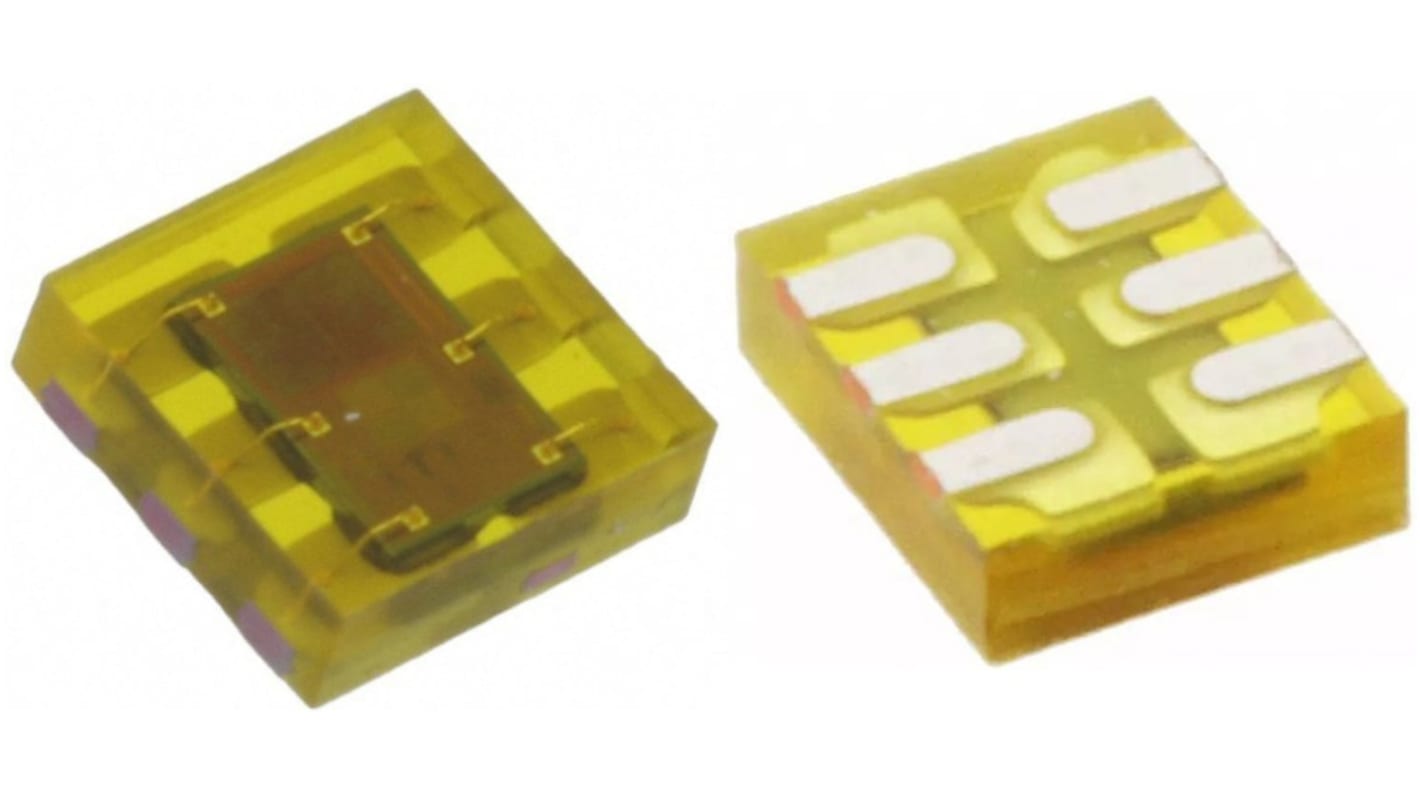
ams OSRAM, Givare för omgivande ljus, ODFN 850 nm 6
- RS-artikelnummer:
- 232-9762
- Tillv. art.nr:
- TSL25911FN
- Tillverkare / varumärke:
- ams OSRAM

För närvarande inte tillgänglig
Vi vet inte om den här artikeln kommer tillbaka i lager, RS har för avsikt att ta bort den från vårt utbud snart.
- RS-artikelnummer:
- 232-9762
- Tillv. art.nr:
- TSL25911FN
- Tillverkare / varumärke:
- ams OSRAM
Specifikationer
Datablad
Lagstiftning och ursprungsland
Produktdetaljer
Hitta liknande produkter genom att välja ett eller flera attribut.
Välj alla | Attribut | Värde |
|---|---|---|
| Varumärke | ams OSRAM | |
| Produkttyp | Givare för omgivande ljus | |
| Typisk stigtid | 300ns | |
| Typisk falltid | 300ns | |
| Typ av fäste | Yta | |
| Kapseltyp | ODFN | |
| Minsta matningsspänning | 2.7V | |
| Maximal detekterad våglängd | 850nm | |
| Maximal matningsspänning | 3.6V | |
| Tillämpning | Kommersiellt | |
| Antal stift | 6 | |
| Utgångssignaltyp | I2C | |
| Minsta arbetsstemperatur | -40°C | |
| Höjd | 650μm | |
| Bredd | 2.4mm | |
| Serie | TSL | |
| Längd | 2mm | |
| Standarder/godkännanden | No | |
| Maximal arbetstemperatur | 85°C | |
| Fordonsstandard | Nej | |
| Välj alla | ||
|---|---|---|
Varumärke ams OSRAM | ||
Produkttyp Givare för omgivande ljus | ||
Typisk stigtid 300ns | ||
Typisk falltid 300ns | ||
Typ av fäste Yta | ||
Kapseltyp ODFN | ||
Minsta matningsspänning 2.7V | ||
Maximal detekterad våglängd 850nm | ||
Maximal matningsspänning 3.6V | ||
Tillämpning Kommersiellt | ||
Antal stift 6 | ||
Utgångssignaltyp I2C | ||
Minsta arbetsstemperatur -40°C | ||
Höjd 650μm | ||
Bredd 2.4mm | ||
Serie TSL | ||
Längd 2mm | ||
Standarder/godkännanden No | ||
Maximal arbetstemperatur 85°C | ||
Fordonsstandard Nej | ||
The ams TSL2591 series is a very high sensitivity light-to-digital converter that transforms light intensity into a digital signal output capable of direct I2C interface. The device combines one broadband photodiode and one infrared-responding photodiode on a single CMOS integrated circuit. Two integrating ADCs convert the photodiode currents into a digital output that represents the irradiance measured on each channel. This digital output can be input to a microprocessor where illuminance in lux is derived using an empirical formula to approximate the human eye response. It supports a traditional level style interrupt that remains asserted until the firmware clears it.
Design flexibility for dark glass and placement
Enables operation in IR light environments
Enables dark room to sunlight operation
Reduces microprocessor interrupt overhead
Improves lux accuracy across various light sources