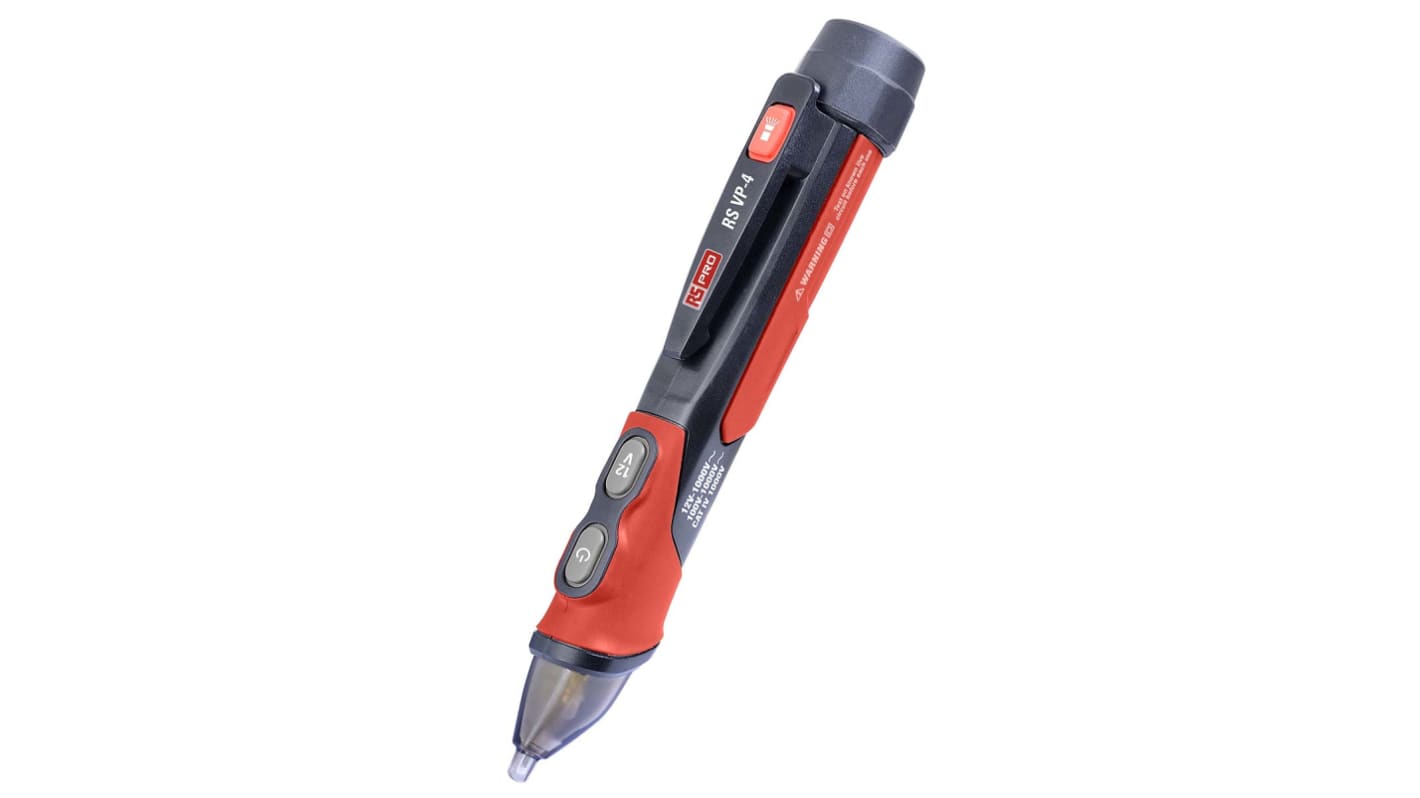
RS PRO RS VP-4 Non Contact Voltage Indicator, 50V ac to 1000V ac
- RS-artikelnummer:
- 136-5675
- Tillverkare / varumärke:
- RS PRO

Antal (1 enhet)*
390,96 kr
(exkl. moms)
488,70 kr
(inkl. moms)
GRATIS leverans för online beställningar över 500,00 kr
I lager
- Dessutom levereras 274 enhet(er) från den 22 december 2025
- Dessutom levereras 39 enhet(er) från den 22 december 2025
- Dessutom levereras 250 enhet(er) från den 04 mars 2026
Behöver du mer? Ange den kvantitet du behöver och klicka på "Kontrollera leveransdatum"
Enheter | Per enhet |
|---|---|
| 1 + | 390,96 kr |
*vägledande pris
Kalibrerade alternativ:
- Typ av kalibrering:
- RSCAL
- RS-artikelnummer
- 136-5749
Varje
1 127,96 kr
(exkl. moms)
1 409,95 kr
(inkl. moms)
- RS-artikelnummer:
- 136-5675
- Tillverkare / varumärke:
- RS PRO
Specifikationer
Datablad
Lagstiftning och ursprungsland
Produktdetaljer
Hitta liknande produkter genom att välja ett eller flera attribut.
Välj alla | Attribut | Värde |
|---|---|---|
| Brand | RS PRO | |
| Indicator Type | Voltage | |
| Battery Type | AAA | |
| Power Source | Battery | |
| Safety Category | CAT IV 1000 V | |
| Maximum Detection Voltage | 1000V ac | |
| Minimum Detection Voltage | 50V ac | |
| Maximum Operating Temperature | +50°C | |
| Safety Category Voltage | 1000V | |
| Minimum Operating Temperature | 0°C | |
| Model Number p | RS VP-4 | |
| Safety Category Level | CAT IV | |
| Välj alla | ||
|---|---|---|
Brand RS PRO | ||
Indicator Type Voltage | ||
Battery Type AAA | ||
Power Source Battery | ||
Safety Category CAT IV 1000 V | ||
Maximum Detection Voltage 1000V ac | ||
Minimum Detection Voltage 50V ac | ||
Maximum Operating Temperature +50°C | ||
Safety Category Voltage 1000V | ||
Minimum Operating Temperature 0°C | ||
Model Number p RS VP-4 | ||
Safety Category Level CAT IV | ||
- COO (Country of Origin):
- CN
RS PRO VP-4 Non-Contact Voltage Indicator
Safely detect the presence of AC voltage in cables, wires, wall sockets fuses and junction boxes with the RS PRO VP-4. Ergonomically designed for comfort, it features a built in torch for confined spaces, a clip for pockets or tool boxes and a contoured grip. This is an essential tool for every electrician, technician or tradesperson.
Features and Benefits:
• Altitude 2000 meters
• Non-Contact Detection of AC Voltage 200 V ac to 1000 V ac, 12 V to 1000 V ac
• Frequency Range: (50 Hz / 60 Hz)
• Battery: 2 x 1.5 V batteries (AAA)
• Operating Temperature: 32°F to 122°F (0°C to 50°C)
• Rugged, double moulded case
• Safety Compliance: CAT IV-1000 V
• IP67
• Non-Contact Detection of AC Voltage 200 V ac to 1000 V ac, 12 V to 1000 V ac
• Frequency Range: (50 Hz / 60 Hz)
• Battery: 2 x 1.5 V batteries (AAA)
• Operating Temperature: 32°F to 122°F (0°C to 50°C)
• Rugged, double moulded case
• Safety Compliance: CAT IV-1000 V
• IP67
Frequently asked questions:
What is a non-contact voltage tester used for?
Voltage testers or detectors are used to check the flow of current through a circuit. They can be used to check safety, or to ensure equipment is functioning correctly. They can also test for the current strength, whether the circuit is grounded correctly or to ensure no current is flowing at all so that work can be begin on the circuit.
How do non-contact voltage testers work?
Also known as a voltage detector, voltage tester pens, sensors or test pens. They allow the user to test electrical conductors without touching them. Non-contact testers are the safest and easiest way to detect electric fields or voltage. Voltage testers utilise what is called capacitive coupling, the user holding the instrument provides a ground reference. The tester then detects changing electric field around the object or objects conducting an AC current. (Alternating current) Simply put, the user and the tester pen when near the electrical conductor will cause a small current to flow through the tester from the source, this is how it detects AC voltage.
Voltage testers or detectors are used to check the flow of current through a circuit. They can be used to check safety, or to ensure equipment is functioning correctly. They can also test for the current strength, whether the circuit is grounded correctly or to ensure no current is flowing at all so that work can be begin on the circuit.
How do non-contact voltage testers work?
Also known as a voltage detector, voltage tester pens, sensors or test pens. They allow the user to test electrical conductors without touching them. Non-contact testers are the safest and easiest way to detect electric fields or voltage. Voltage testers utilise what is called capacitive coupling, the user holding the instrument provides a ground reference. The tester then detects changing electric field around the object or objects conducting an AC current. (Alternating current) Simply put, the user and the tester pen when near the electrical conductor will cause a small current to flow through the tester from the source, this is how it detects AC voltage.