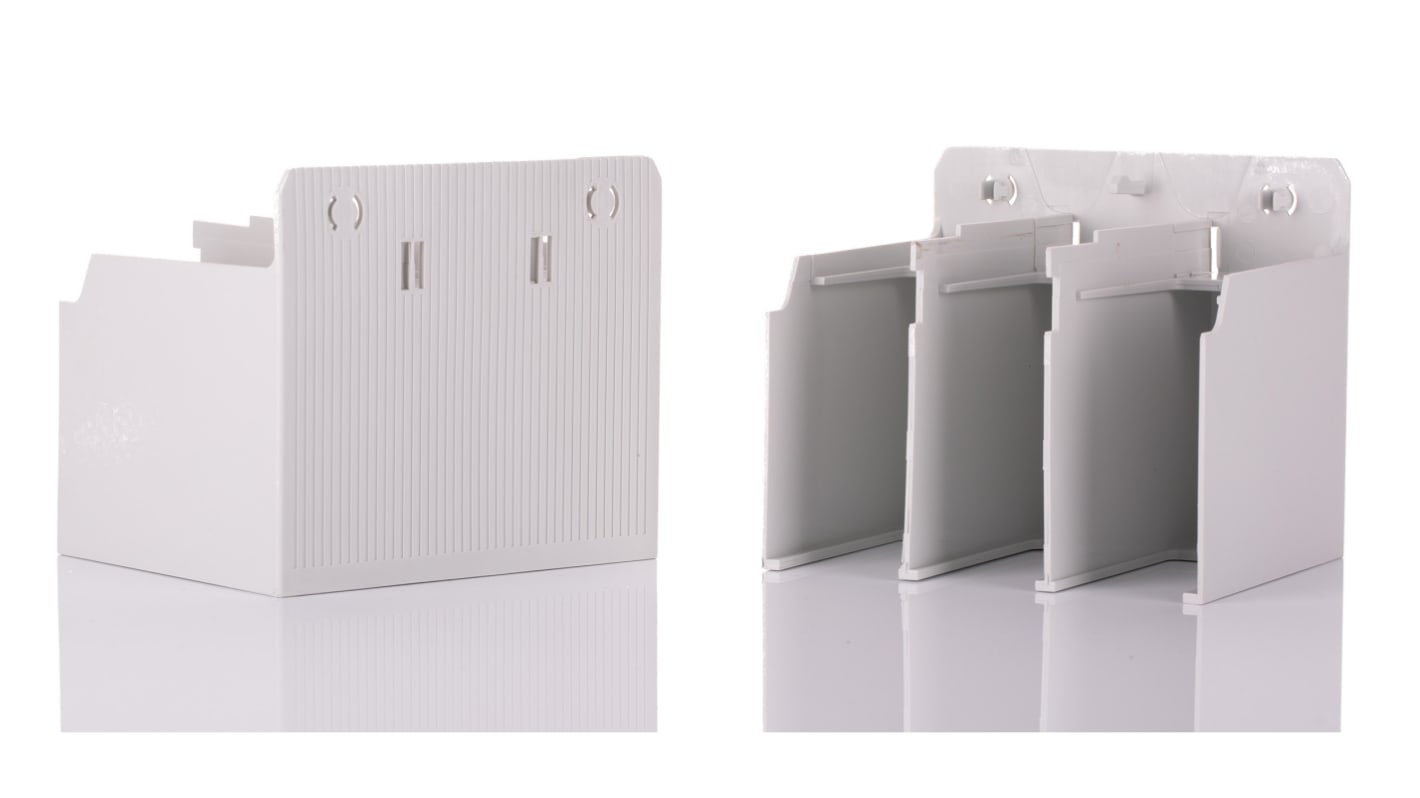
Allen Bradley Terminal Shroud for use with 100-E116 to 100-E146 Wye Contactor
- RS-artikelnummer:
- 183-4577
- Distrelec artikelnummer:
- 302-27-106
- Tillv. art.nr:
- 100-ETS146L
- Tillverkare / varumärke:
- Allen Bradley

Antal (1 enhet)*
876,18 kr
(exkl. moms)
1 095,22 kr
(inkl. moms)
GRATIS leverans för online beställningar över 500,00 kr
Lagerinformation är för närvarande otillgänglig
Enheter | Per enhet |
|---|---|
| 1 + | 876,18 kr |
*vägledande pris
- RS-artikelnummer:
- 183-4577
- Distrelec artikelnummer:
- 302-27-106
- Tillv. art.nr:
- 100-ETS146L
- Tillverkare / varumärke:
- Allen Bradley
Specifikationer
Datablad
Lagstiftning och ursprungsland
Produktdetaljer
Hitta liknande produkter genom att välja ett eller flera attribut.
Välj alla | Attribut | Värde |
|---|---|---|
| Brand | Allen Bradley | |
| Accessory Type | Terminal Shroud | |
| Product Type | Terminal Shroud | |
| For Use With | 100-E116 to 100-E146 Wye Contactor | |
| Standards/Approvals | No | |
| Välj alla | ||
|---|---|---|
Brand Allen Bradley | ||
Accessory Type Terminal Shroud | ||
Product Type Terminal Shroud | ||
For Use With 100-E116 to 100-E146 Wye Contactor | ||
Standards/Approvals No | ||
- COO (Country of Origin):
- SE
Allen Bradley Terminal Shroud For Contactors With Compression Lugs - 100-ETS146L
Use this Allen Bradley terminal shroud from Rockwell Automation to enhance the safe operation of your industrial contactors. It's designed to cover connection points in Wye contactors from the 100-E116 to 100-E146 ranges, preventing exposure to live parts for a reduced risk of electric shocks. Made of durable thermoplastic material, the shroud offers reliable impact resistance so you can use it in harsh environments. Components like this are commonly found in industrial settings like production plants and assembly lines.
• Simple, tool-free installation saves time and effort
• Low-profile design to fit into setups with limited space
• Open top construction allows for passive cooling from the atmosphere, preventing heat accumulation for optimal performance
Standards and Certifications
• RoHS
Terminal Shrouds 100-E116...100-E146.
How does a contactor work?
Terminal Shrouds
Not applicable when using 105-PW or 170-PW power wiring kits
A contactor is an electromechanical switch used to control the power supply to a load. It features two major components – a coil or electromagnet and contacts. When current passes through the device, its coil produces a magnetic field. This makes the contactor move its armature and the normally closed contact completes the circuit between the fixed and moving contacts, allowing current flow to the load.