Our project
This year, we are introducing significant changes to our projects, particularly in our flagship initiative, PoliWRocket. Our goal for the latest rocket project, R7 Together, is to implement a liquid-fueled rocket engine to replace our current hybrid propulsion system. This transition requires the integration of new technological solutions across multiple systems, ensuring the successful launch of our vehicle.
What’s new
The PWr in Space team has tackled many challenges, and each new project is an opportunity to learn. This year, our rocket design demands the implementation of advanced technologies that we are introducing for the first time. One of our key initiatives is the development of a bi-liquid fueling station, designed to handle two separate liquid propellants stored in dedicated tanks within the rocket and injected during flight.
A major challenge we face is precisely measuring the amount of nitrous oxide (N₂O) introduced into the rocket’s tanks. During the fueling process, we must carefully monitor pressure levels, as they significantly impact the rocket’s achievable altitude.
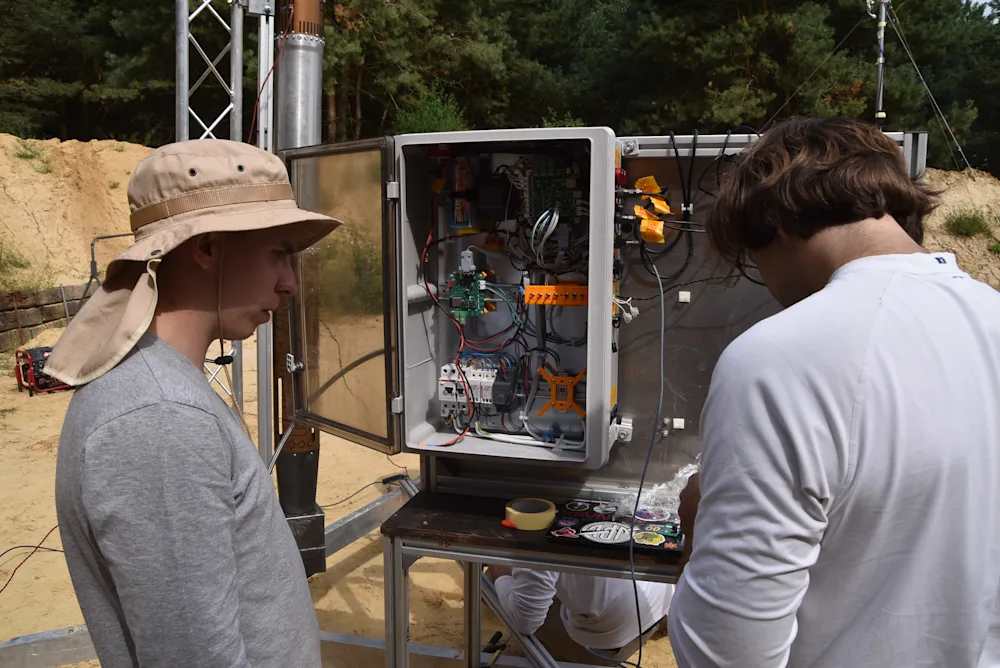
To address this, we have designed a specialized fueling station equipped with technology to monitor pressure and prevent valve freezing—an issue caused by temperature fluctuations during fueling. The revamped system includes improved load cells and more reliable electronics, eliminating drift and noise problems encountered in previous designs. In other words, to enhance our system’s performance, we have integrated components that measure the amount of injected fuel more accurately—similar to an advanced scale that precisely weighs the fluids. These upgrades ensure the highest level of precision, which is essential for success in competitions such as EuRoC and SAC.
Beyond technical advancements, safety remains our top priority. Our fueling system includes automatic safety valves that activate in response to unexpected pressure surges, ensuring a secure fueling process.